
Any time I get an RPG for Random Game Wednesdays, I feel a little bit of dread. I typically only play about half an hour of a game before writing about it for these posts, and that’s not a lot of time to get a good feel for them. Thankfully, I’m pretty familiar with Final Fantasy VIII. It’s actually always been one of my favorites in the series, however it’s also a game that came out when I was in middle school. Considering how much criticism the game gets, it’s definitely possible that my love for it is mostly nostalgia. But hey, let’s take a look at the beginning of Final Fantasy VIII and see what I think about it.
Immediately upon starting the game, you’re presented with a gorgeously animated CGI cutscene, depicting several characters out of context, as well as main character Squall training with his rival, Seifer. The previous game, Final Fantasy VII, is well known for many things, but one of the big things that people talked about at the time of its release was how good the prerendered cutscenes looked, especially compared to the playable graphics. It seems like Squaresoft saw that response and decided to push further in that direction. Not only does the game start with a flashy cutscene, but it gives you more of them much more frequently than the previous game. There’s even some instances of prerendered backgrounds during normal gameplay suddenly shifting into animated cutscenes. It’s really cool tech that’s still just as cool today.
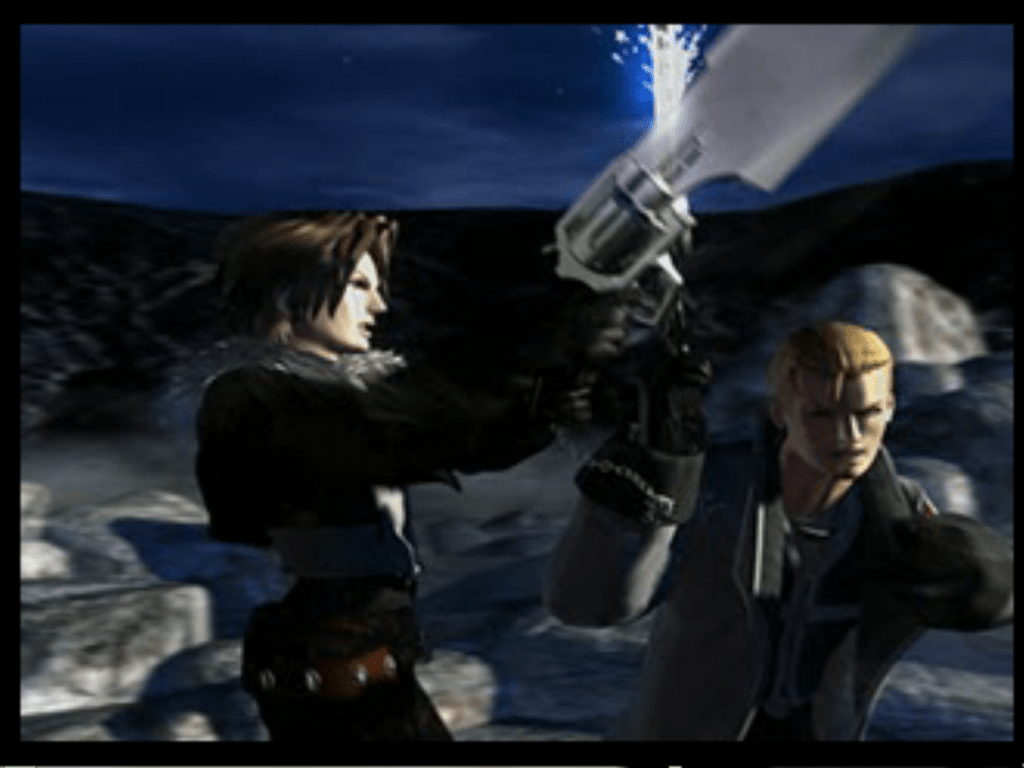
The graphics during gameplay are also a huge step up from VII. The characters are given much more realistic proportions, the backgrounds are extremely detailed, and it’s just a generally really pretty looking game. There’s definitely an argument to be made for preferring the more stylized characters in VII, they look closer to being a 3D representation of what characters in the older games looked like. I however prefer the look of this game, it just seems better realized than what VII did.
When you do get control of your character after that initial flashy cutscene, you get the option to name him. Having the option to name your characters, but each character having a default, canon name is a long time Final Fantasy tradition, but I had forgotten that you only get to name the main character. I changed Squall’s name to Squash, and I was planning to give everyone else goofy names, but unfortunately, Instructor Quistis comes into the room to check on Squash and the option just doesn’t come up.
Not a whole lot happens in the opening half hour of the game. Quistis takes you to back to class, tells people that the SeeD exam is today, and that you still have to complete a prerequisite before you can do it. The game doesn’t do a whole lot early on to explain what’s going on, but you learn that you’re in a building called a Garden and it’s a school for special forces trainees, called SeeDs. I think that’s pronounced “seed”, to fit the garden theme, but I don’t know why the D is capitalized, and there’s no voice acting, so hard to know for sure. Anyway, Quistis tells you to check out your computer for some tutorials and then meet her out front.

The tutorials are actually kind of cool. You go to your computer and read up on things, but there’s also just general world building stuff. Information about events going on in the Garden, messages from people, things like that. The computer also gives you your first two Guardian Forces, or GFs. You can actually name those, so I changed Quetzalcoatl’s to “Birdo” and Shiva’s to “Elsa”. GFs are VIII’s version of the traditional Final Fantasy summons. As normal, you can use them in battle to deliver a devastating attack, but they also are the key part of the game’s new “junction system”.
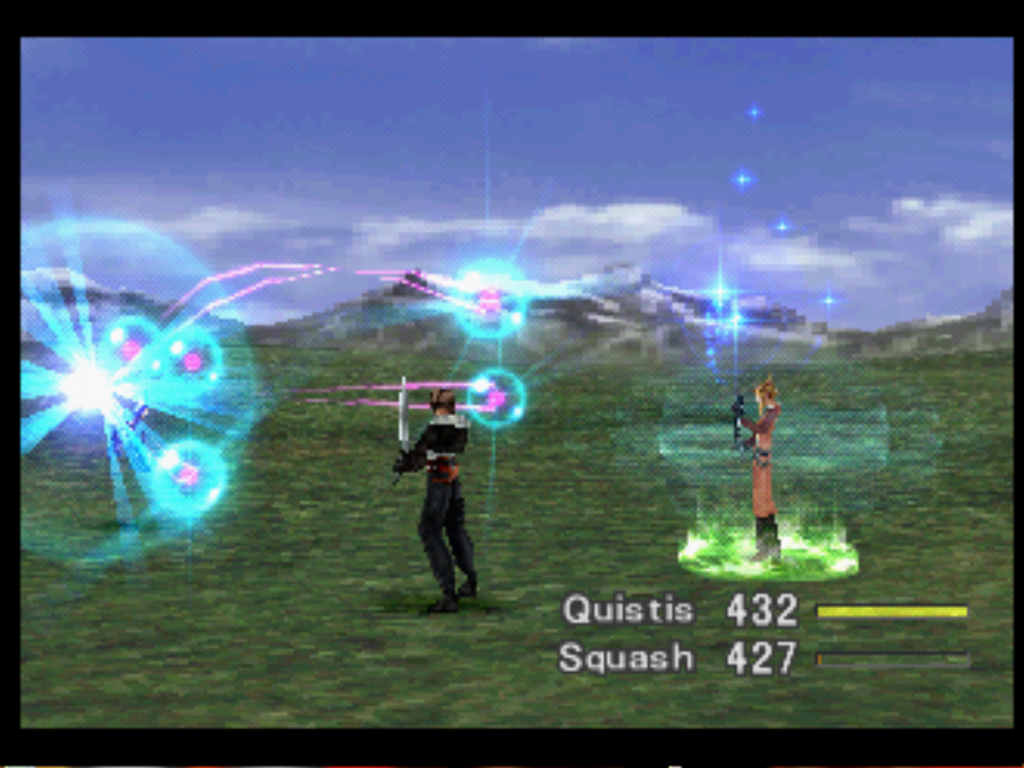
Remember when I mentioned this game has some serious criticisms? The Junction System is one of the biggest. So, equipping a GF to a character grants different abilities, mostly ones for enhancing your characters stats. But in order to do that, you have to equip magic spells to those stats. Unlike previous games, you have to “draw” spells from enemies or designated spots instead of just learning spells. These give you a set amount of uses of the spell, instead of a MP cost like most RPGs have. When you junction a spell to a stat, the amount of enhancement you get is based entirely on how much of the spell you have. Enemies also level up with you when you gain experience, so these junctions are really the only way to give your characters an advantage. This means that if you want to be in the best shape that you can be, you really don’t want to be casting spells, as it’ll weaken your stats. It also means that every time you encounter an enemy that has a spell that you don’t have, the optimal strategy is to just keep drawing that spell until you have the maximum amount. This takes up a lot of time and is pretty boring. In the early going, you can kind of get away with not doing this, but I wanted to re-experience the optimal way to do it, so I got one hundred fire spells and one hundred scan spells for both Squash and Quistis before heading off to deal with that prerequisite.
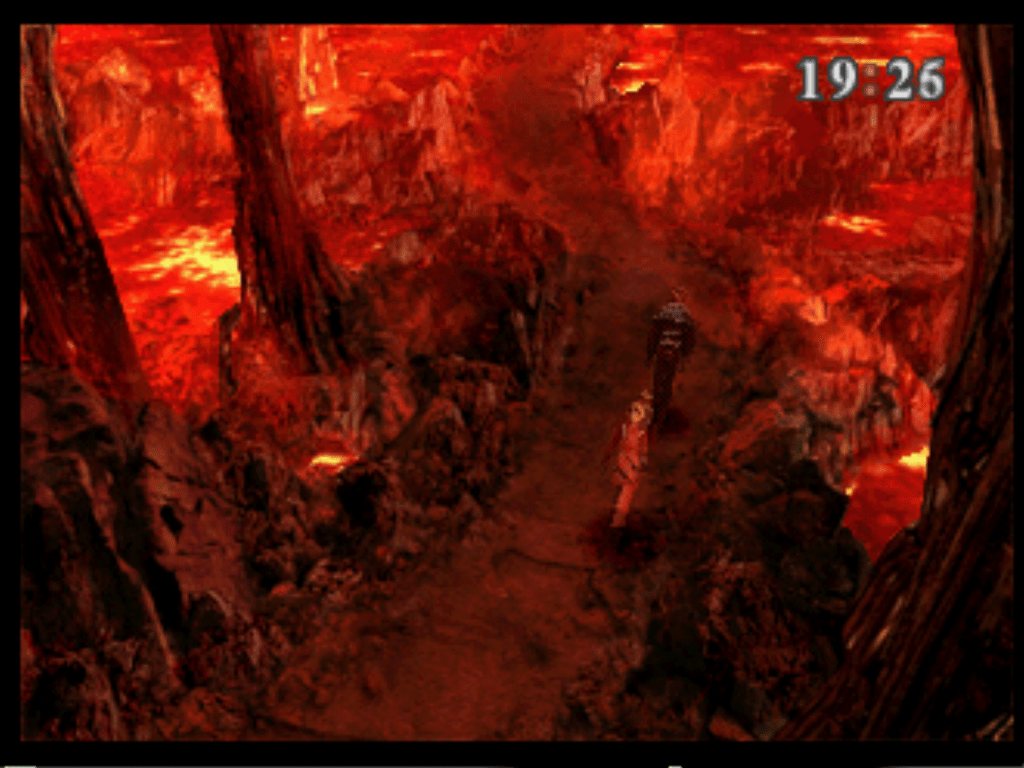
So what is it we have to do? We go to the “fire cave” and try to obtain a low ranked GF, Ifrit. Before heading in, some guards ask you what time limit you want to do. I chose twenty minutes, which is the second shortest one. I honestly don’t know what that gets you, but it’s more than enough time. The fire cave is mostly just running through a couple fiery corridors until you encounter Ifrit.
Ifrit is the first fight with any kind of real challenge to it, but he’s not all that difficult. He’s weak to ice, so casting Elsa does a ton of damage, and causes him to panic a bit. He deals a lot more damage than the random monsters I had been fighting, which reminded me of this game’s limit break system. Unlike VII’s, which is a meter that builds up as you get hit, in VIII, when you’re low on health, there’s a chance you can just do a strong attack, called a limit break. Between Quistis’s limit break, which was shooting lasers out of her eyes, and Squash using Elsa, Ifrit was defeated pretty quickly.
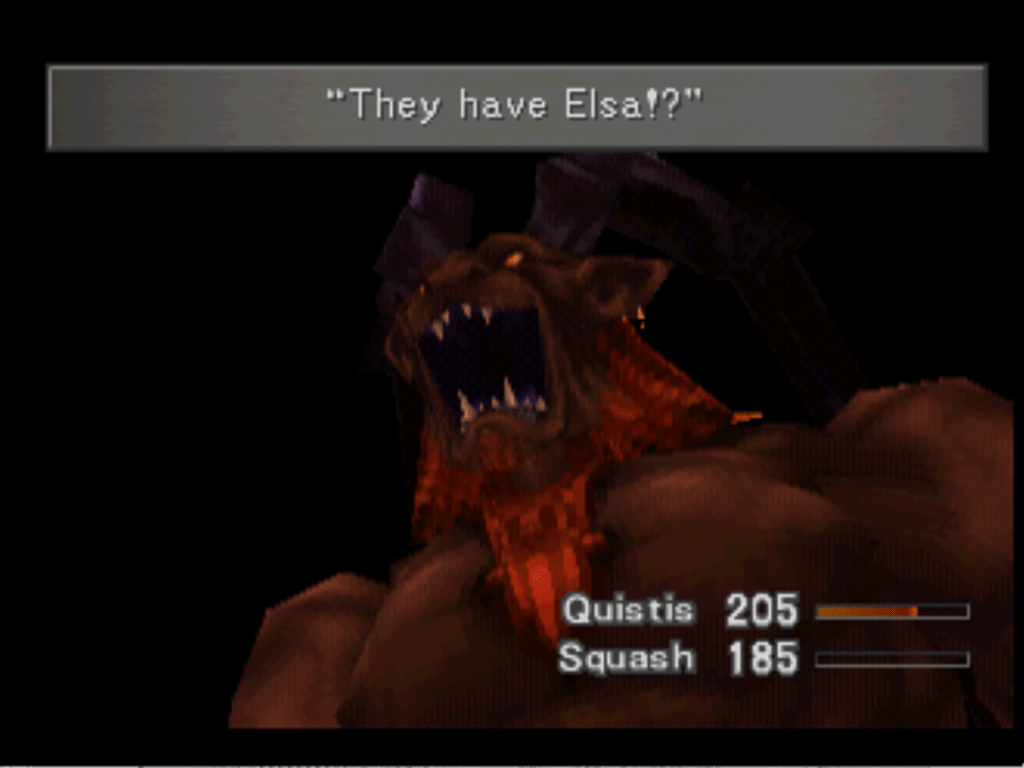
This is where I stopped playing. It’s not the most exciting start to a game, but I enjoyed my time with it. I think if I was going to do a real serious playthrough of Final Fantasy VIII, I’d pick up the remastered version instead, but the original PS1 version is still a good time. It’s visually really impressive, has some cool early world building, and is pretty easy to pick up and go. The junction system holds it back from being something I can recommend with full confidence, but I still think it’s worth checking out.
 Quarter Circle Forward
I remember fondly heading down to my room in my basement, turning on the gas powered space heater for some extra warmth, and making my way through FFVIII. I actually had to play it twice because when I got to the final dungeon, I took a break from the game to play Symphony of the Night – which asks you to format your memory card in order to save. I, a young kid, was not yet familiar with the term “format,” so I figured this was just Castlevania’s way of creating a save file. Lo and behold, my entire card was erased, and I had to begin my adventure with Squall all over again. So I borrowed a guide from a friend, maxed out on all abilities, and decided to find every possible secret. It was actually a much more fun experience the second time around!
LikeLike